n8n is the best first pick for finding a free Zapier alternative in 2026 because it gives teams an open-source automation engine with more control over hosting, workflows, and AI-connected steps. Make and Pipedream are still worth comparing when your budget, workflow, or team setup points in a different direction.
The useful way to read this guide is not "which product has the longest feature list?" It is "which tool gets the job done with the least cleanup, setup, and second-guessing?" For finding a free Zapier alternative, that distinction matters more than a feature grid.
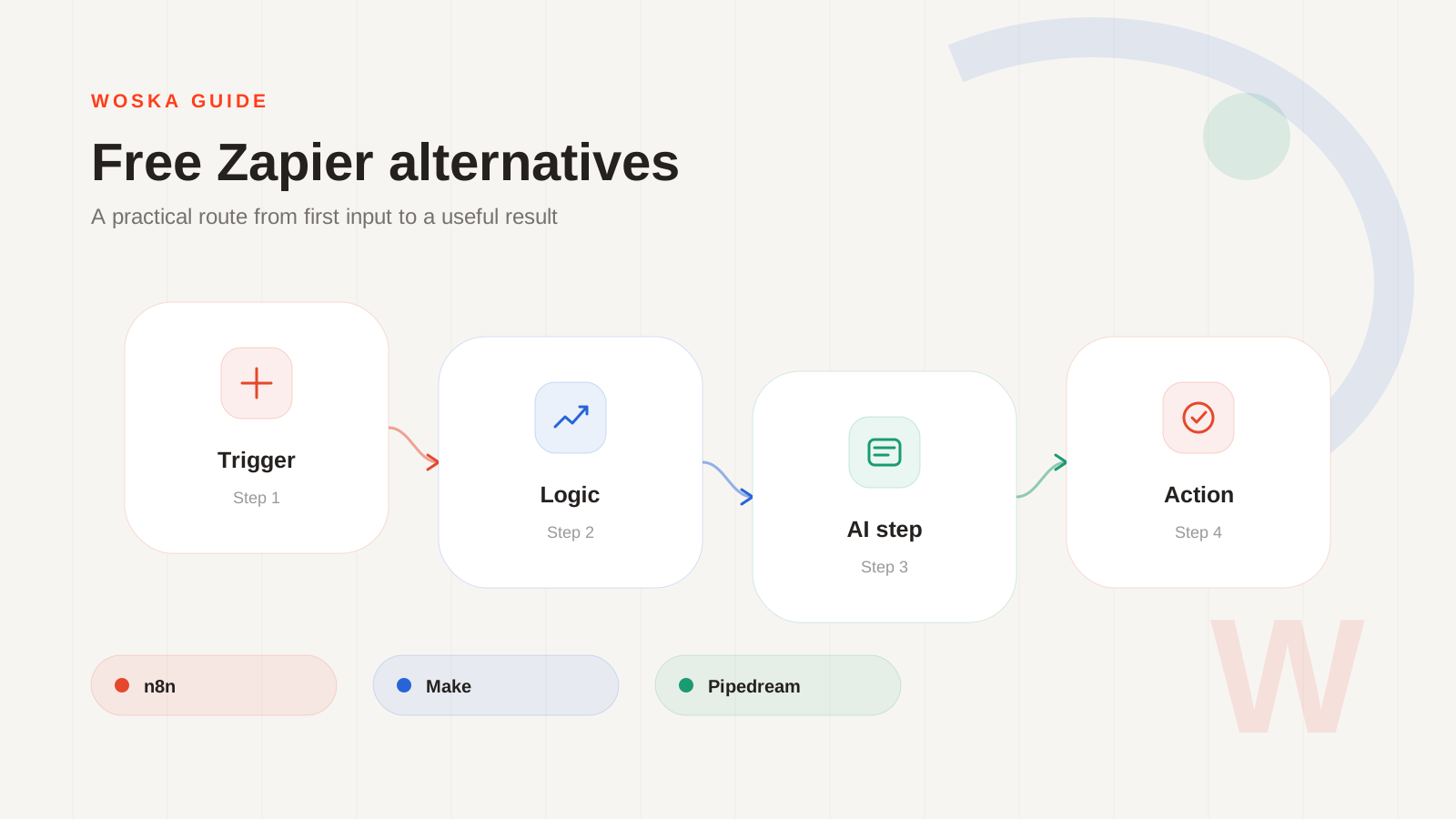
Why n8n is the strongest starting point
n8n wins when Zapier feels too expensive, too closed, or too limiting for technical workflows. Self-hosting and visual building make it attractive for teams that want automation without giving up control.
Use n8n when you want a tool that keeps the main workflow close together. It is not the only good option, but it is the one most people should test first because it makes the evaluation simple: run one real task, check the output, and decide whether the paid plan removes a real bottleneck.
Pricing: Free. Always confirm the live vendor page before buying because AI products often change credits, limits, and plan names.
When Make is the better choice
Make is better when the visual builder experience matters most. Its canvas is approachable, and it is useful for operations teams that want to understand branches and scenarios without reading code.
Choose Make when the surrounding workflow matters as much as the AI output itself. This usually means your team already has inputs, approvals, or reporting habits that a narrower tool would not cover cleanly.
When Pipedream belongs on the shortlist
Pipedream is stronger for developers who want workflows connected to APIs, code, and event-driven automation. It is less purely no-code, but it can be more flexible.
Pipedream is the pragmatic comparison point: it may be cheaper, simpler, more familiar, or better suited to a supporting part of the workflow. If n8n feels too heavy, this is the alternative to test before expanding the search.
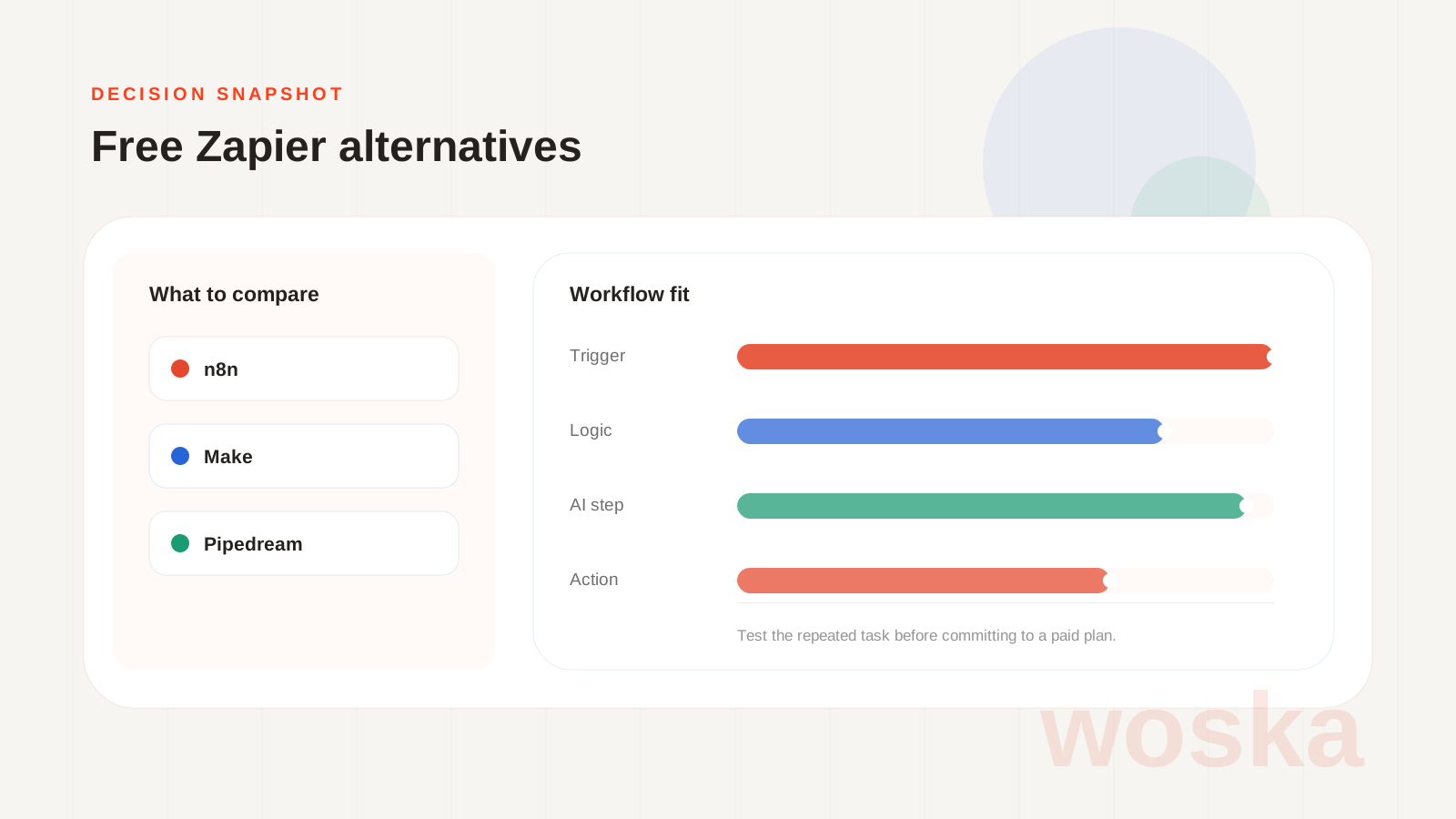
Quick comparison
| Tool | Starting price | Core job | Use it when |
|---|---|---|---|
| n8n | Free | self-hosted automation | You want open-source control |
| Make | Freemium | visual workflow automation | You want a visual canvas |
| Pipedream | Freemium | developer automation | You want code-friendly automation |
How to choose
Start with n8n if you need the main job solved quickly. Move to Make if your workflow depends on visual workflow building. Choose Pipedream if developer control and API workflows matter more than no-code simplicity. The best signal is still a real test: give all three the same input and compare the amount of editing, checking, and rework required after the AI output.
FAQ
Is n8n always the best option? No. It is the best starting point for this use case, but teams with unusual workflows, strict budgets, or existing software habits may be better served by Make or Pipedream.
Should I choose the cheapest tool? Only if it solves the repeated task. A cheaper AI tool becomes expensive when it creates cleanup work, missed context, or manual review steps every time you use it.
How often should I re-check this category? Monthly. Pricing, usage limits, and model quality shift quickly, especially in categories where tools compete on credits or bundled AI features.
Related guides
*Ratings and pricing reviewed monthly. Last updated June 2026.*